Case Note on East Riding of Yorkshire Council v KMG
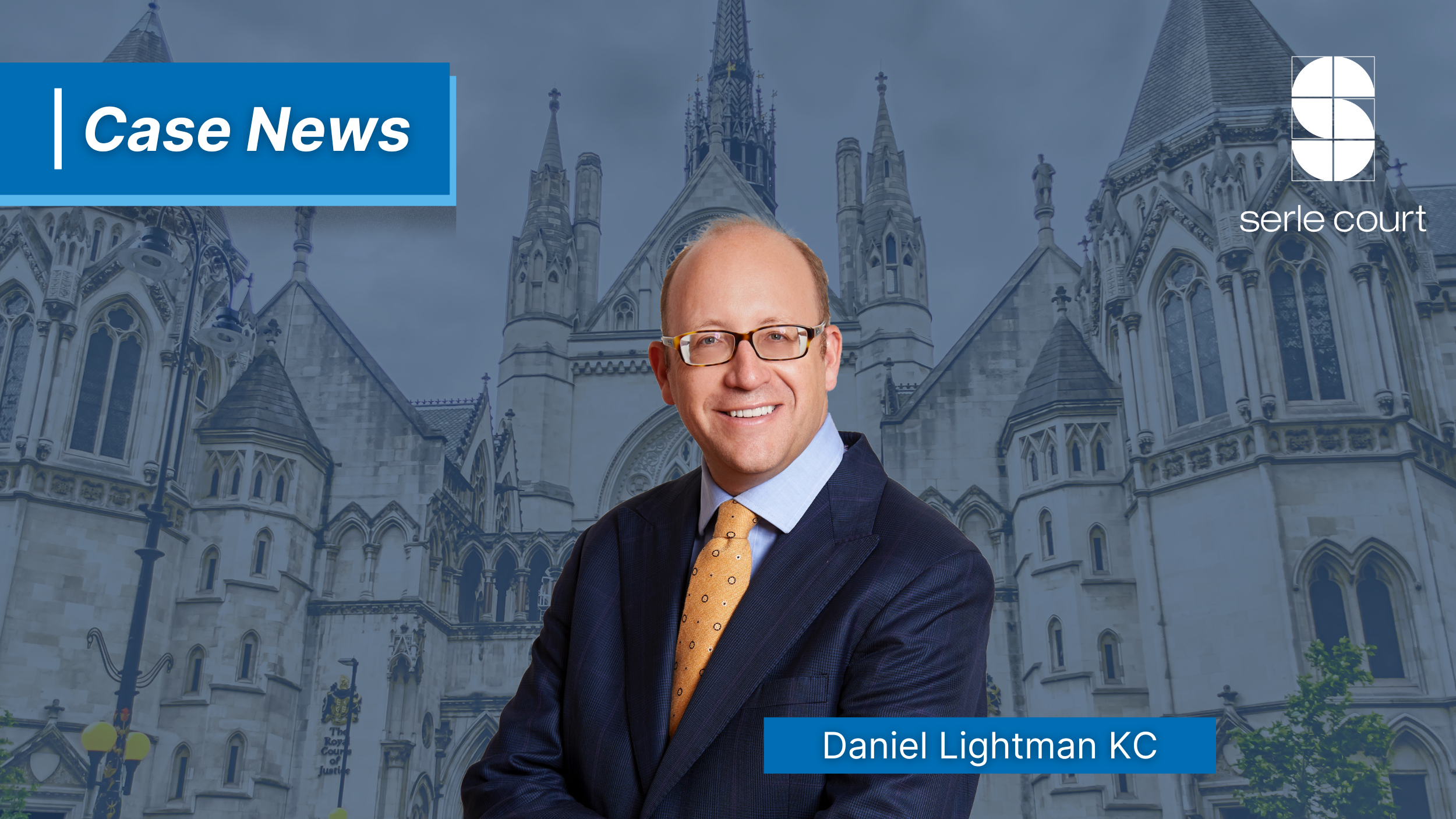
Is a “dedicated fund” of a Luxembourg specialised investment company an unregistered company within the meaning of section 220, and hence capable of being wound up by the Court under section 221, of the Insolvency Act 1986? And what are the requirements of an “association” for the purposes of section 220?
This morning, the Court of Appeal handed down a significant judgment in East Riding of Yorkshire Council v KMG SICAV-SIF-GB Strategic Land Fund [2025] EWCA Civ 1137, in which it addressed these questions – and gave authoritative guidance as to what an “association” is for the purposes of section 220 of the 1986 Act. Daniel Lightman KC has summarised some key implications of the judgment below.
Section 221(1) of the 1986 Act provides that “any unregistered company may be wound up under this Act”. By section 220, unregistered company “includes any association and any company, with the exception of a company registered under the Companies Act 2006 in any part of the United Kingdom”.
In his judgment, with which Lady Justices Nicola Davies and King agreed, Lord Justice Snowden noted that whilst as a matter of language, the word “association” is a very general one, capable of covering a wide variety of bodies, it has been given a narrower meaning in the context of the winding up legislation. He held that “to fall within section 220(1), an association must be comprised of persons who have some substantive legal relationship with each other, rather than persons who are connected for purely social or personal reasons or who merely share a common interest”.
Snowden LJ went on to point out that, given the essential nature of the winding up process is a means of collective enforcement of debts, it is axiomatic that in the case of an association, the property that is subject to the process must be property which belongs to the association or to which the association is entitled; the creditors to whom the proceeds of realisation are to be distributed must be creditors of the association; and any persons to whom a surplus may be distributed must be persons who have such entitlement as against the association.
In dismissing East Riding’s second appeal against the dismissal of the winding-up petition it had presented in respect of a sub-fund of an investment company incorporated in Luxembourg, Snowden LJ held that the sub-fund was not an “unregistered company”, rejecting East Riding’s argument that it was an “association” within the meaning of section 220.
Daniel successfully opposed this appeal, working with Oliver Caplan (18 St John Street Chambers) and Ben Gold, Caroline Shiffner and Sarah Herniman of RPC. The same team had previously successfully opposed East Riding’s first appeal, which Richard Smith J had dismissed in November 2024 ([2024] EWHC 2845 (Ch); [2025] Bus LR 1214; [2025] BCC 249).
For those who’d like to read it, a copy of the Court of Appeal’s judgment is below.
Related Barristers
As part of a broad Chancery-Commercial practice, Daniel Lightman KC engages with challenging and novel issues of law and civil procedure, in particular concerning shareholder disputes (having appeared in a number of landmark unfair prejudice petitions and derivative claims), company law (including in matrimonial proceedings), insolvency, civil fraud, breach of fiduciary duty and professional negligence.
Shortlisted for Company/Insolvency Silk of the Year in the Chambers & Partners UK Bar Awards in both 2026 and 2024 and shortlisted for Chancery Silk of the Year in the Legal 500 Bar Awards 2026, Daniel is recommended in Band 1 for Silks for Company by both Chambers UK, 2027 and the Legal 500, 2027 – and in Band 1 for Chancery Commercial by Chambers. Chambers UK, 2027 describes him as “A go-to silk for high value, complex disputes who leads the pack on shareholder disputes. He has great judgement and always furnishes reliable advice” and praises him for “constantly identifying innovative solutions to complex problems” and building “outstanding relationships with the wider legal team.”
Daniel has an extensive international practice, including current or recent shareholder litigation in the courts of Abu Dhabi, Bermuda, Cayman, Guernsey and Qatar, and a multi-shareholder arbitration in Hong Kong.

Daniel Lightman KC
Call: 1995
Silk: 2016