Município de Mariana v BHP [2025] EWHC 3001 (TCC)
Judgment has been handed down following the trial of liability in Município de Mariana v BHP. The BHP parent companies, BHP Group (UK) Limited and BHP Group Limited, have been found liable for the collapse of the Fundão iron ore tailings dam in Mariana, Brazil, on 5 November 2015. Via a chain of subsidiaries, BHP owned 50% of the shares in Samarco, a Brazilian company; Samarco in turn owned and operated the mine at Fundão.
The collapse in 2015 occasioned catastrophic environmental harm and socio-economic damage. Litigation in several jurisdictions has followed. In the present action before the English courts more than 620,000 Brazilian individuals, businesses, municipalities and other private entities have advanced claims, with an estimated value of £36 billion. The proceedings are thought to amount to the largest single piece of group litigation ever brought in the UK. The trial of liability was heard between October 2024 and March 2025.
In a lengthy and detailed ruling by Mrs Justice O’Farrell DBE, BHP has been found liable on two bases.
First, BHP are held to be “polluters” under the Brazilian Environmental Law, which imposes strict liability. The Court concluded that BHP (together with Vale, the Brazilian mining company and 50/50 JV partner with BHP in Samarco) were directly and/or indirectly responsible for the activity of Samarco for the following reasons, meeting the relevant test under Brazilian law:
- Samarco was “controlled and operated by BHP and Vale” and BHP were Samarco’s “directing mind”.
- BHP participated and was involved in the activities of Samarco “at every level” from “strategic decisions” to “detailed operational matters”.
- BHP had assumed responsibility for the assessment, control, mitigation and management of risks associated with the Dam.
- Samarco was an asset in which BHP substantially invested and from which it derived substantial financial and commercial benefits.
As it was common ground that Samarco’s activity caused the environmental damage suffered as a result of the collapse, it followed from the Court’s findings that BHP is responsible for Samarco’s activity that BHP are strictly liable for the collapse.
Secondly, BHP has been found to be liable by reason of its own fault (i.e. negligence) under Article 186 of the Brazilian Civil Code, the general provision for delictual liability under Brazilian law.
BHP’s arguments that the collapse was not foreseeable and could not have been prevented were rejected. The Judge found that there was “overwhelming evidence” available before the collapse which pointed towards the clear susceptibility of the Dam to liquefaction, the process which resulted in collapse. The risk of collapse could have been averted by following guiding principles that apply to tailings dams, but these principles were not followed. BHP’s control over Samarco, their assumption of responsibility for risk assessment, management and control of the Dam, and their full participation in the Dam’s operations, gave rise to a legal duty to avoid harm. Instead of remediating the Dam’s structural defects, BHP caused Samarco to expand production and continue to raise the height of the Dam.
In addition to these findings on liability, the Court rejected BHP’s contention that the English claims had been brought out of time. All of the claims issued (between 2018 and 2023) were held to be in time. On a proper analysis, and as argued by the Claimants, time did not start to run for limitation purposes until September 2024 at the earliest. The relevant limitation period is five years.
Two further sets of issues were also determined:
- an issue of standing relating to the Municipality claimants, where BHP’s arguments that they lacked standing by reason of principles of sovereign immunity were rejected; and
- issues of construction relating to releases contained in compensation agreements. The Court ruled on a number of sample agreements determining the scope and effect of the same.
The decision has many implications and insights for future litigation involving allegations of corporate (particularly parent company) liability; multinational corporate governance and control; environmental harms; the application of foreign law principles; foreign law limitation periods; and the conduct of mass tort group litigation.
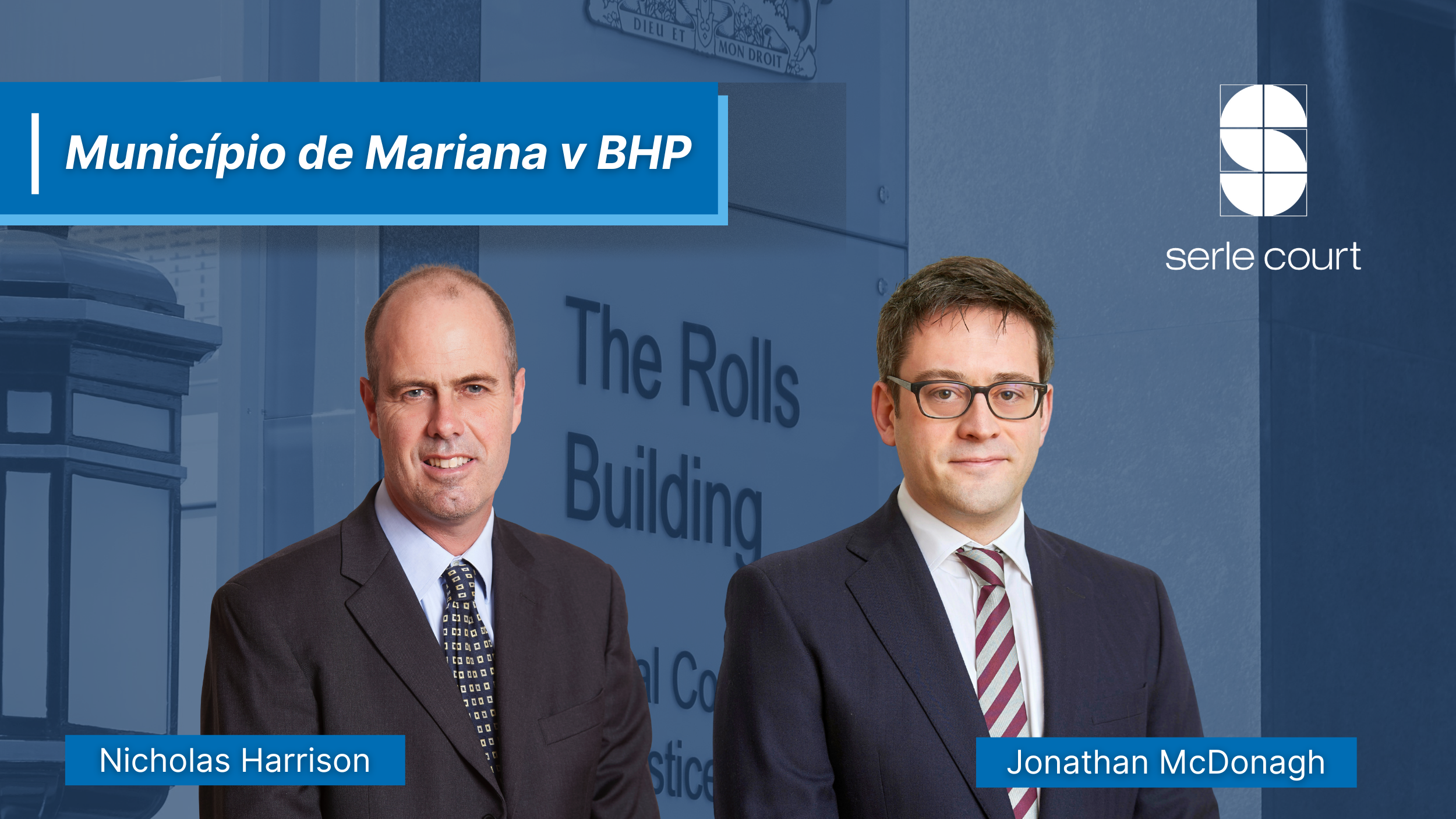
Nicholas Harrison and Jonathan McDonagh have acted for the Claimants, instructed by Pogust Goodhead, since the commencement of the litigation in late 2018; and they both represented the Claimants at trial (led by Alain Choo-Choy KC and Andrew Fulton KC).
Several members of Serle Court have acted for the Claimants at earlier stages of the proceedings. Sophie Holcombe and Jonathan McDonagh are currently instructed in “Stage 2” of the litigation, i.e. preparation for the trial of causation of loss and quantum.
Related Barristers

Sophie Holcombe
Call: 2009

Jonathan McDonagh
Call: 2011